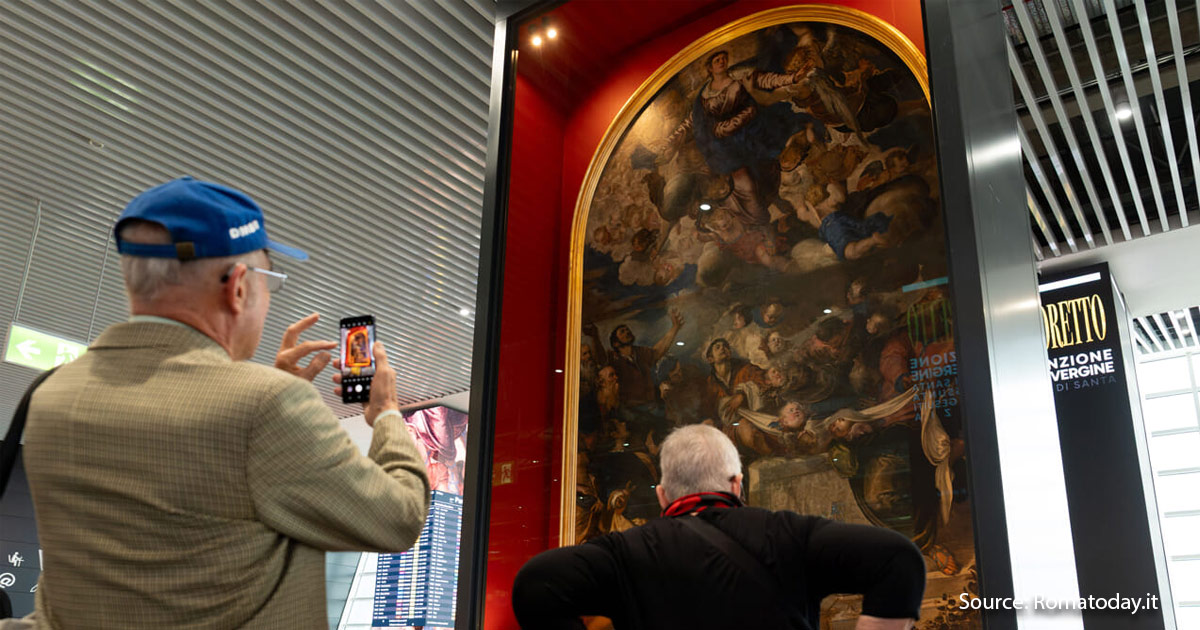
Rome is famous for its extraordinary art, and now travelers can discover a remarkable Renaissance masterpiece in an unexpected place: the airport. Since November 10, 2026, Tintoretto’s The Assumption of the Virgin has been on display at Rome Fiumicino Airport, officially known as Leonardo da Vinci International Airport. The magnificent 16th-century painting is exhibited in the Piazza area of Terminal 1 Departures, giving passengers an opportunity to admire an important work of Venetian Renaissance art without visiting a traditional museum. For art lovers traveling through Rome, it is an unexpected cultural experience worth adding to their airport itinerary.
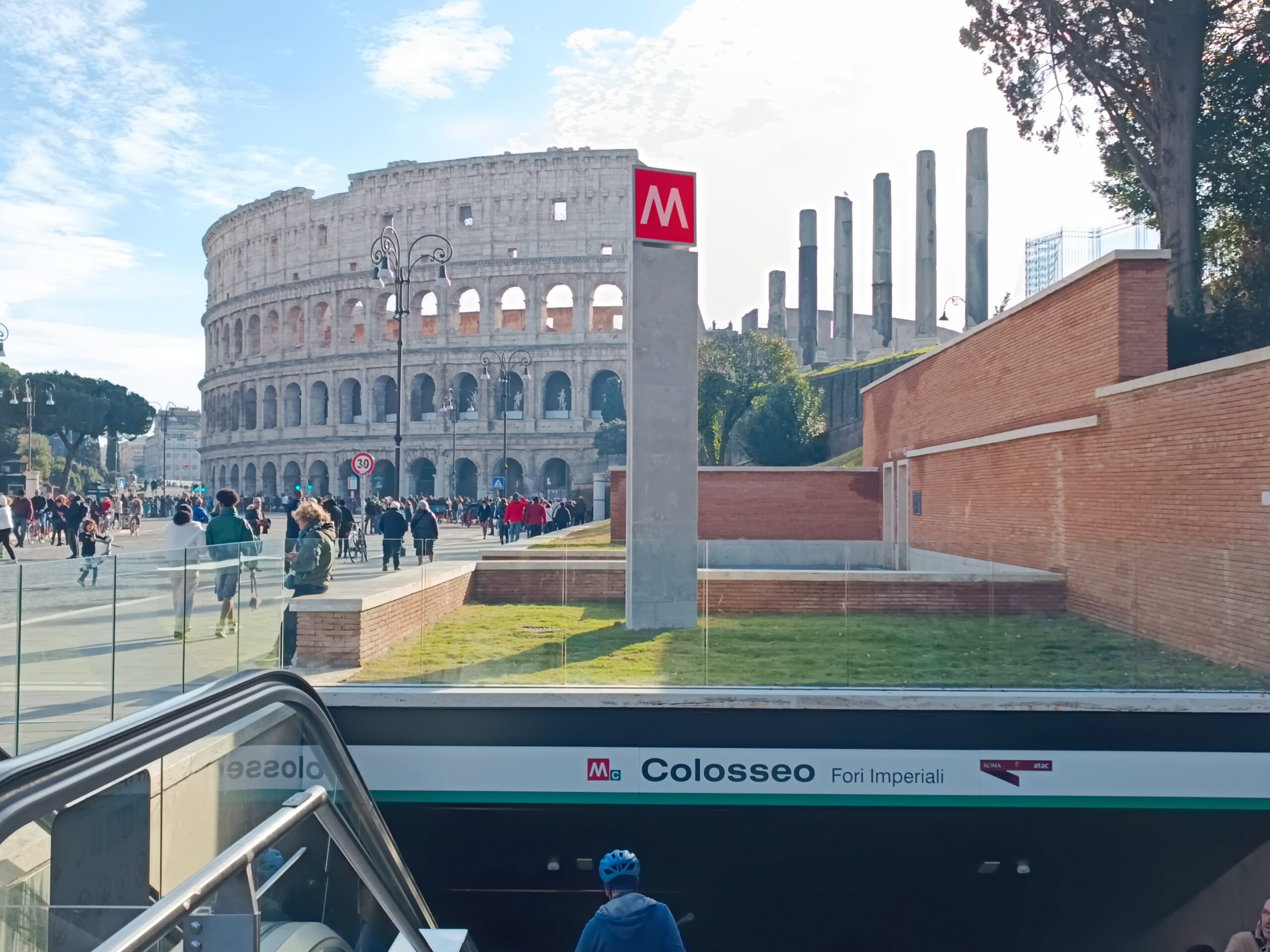
Of course, seeing a masterpiece at the airport is only one way to experience Italy’s extraordinary artistic heritage. Travelers who want to discover the stories behind the Eternal City’s most celebrated monuments can explore private tours in Rome with Kirba Tours. From the Colosseum and Roman Forum to the Vatican Museums, St. Peter’s Basilica, and Rome’s historic neighborhoods, these guided experiences offer a more personal introduction to the city’s history, architecture, and artistic traditions. Whether you’re visiting Rome for the first time or returning to discover something new, a private tour can help turn famous landmarks into meaningful cultural experiences.
If you’re flying through Fiumicino Airport, Tintoretto’s painting offers another opportunity to appreciate Italian art. Here’s where to find it, what makes it special, and how to include this unusual attraction in your travel plans.
Where to See Tintoretto’s Painting at Rome Fiumicino Airport
The Assumption of the Virgin is displayed in the Piazza area of Terminal 1 Departures at Rome Fiumicino Airport.
The exhibition opened on November 10, 2026, as part of an initiative to introduce international travelers to important works of Italian art outside conventional museums and galleries.
Visitor Information at a Glance
- Artwork: The Assumption of the Virgin (Assunzione della Vergine).
- Artist: Jacopo Robusti, known as Tintoretto.
- Date: 1554–1555.
- Location: Piazza area, Terminal 1 Departures.
- Airport: Leonardo da Vinci–Fiumicino Airport (FCO), Rome, Italy.
- Exhibition opening: November 10, 2026.
- Exhibition end date: Not specified in the initial official announcements.
Important travel tip: The painting’s location within Terminal 1 Departures has been confirmed, but travelers should verify whether the exhibition is accessible from their particular airport route. Do not assume that arriving passengers, travelers using other terminals, or visitors without boarding passes can reach the display without restrictions.
For updates about the artwork and airport facilities, consult the official Aeroporti di Roma website.
Why Is There a Tintoretto Painting at Fiumicino Airport?
Most visitors associate Renaissance masterpieces with historic churches, famous museums, and private art collections. Finding an important 16th-century painting inside an international airport is therefore a pleasant surprise.
The exhibition is part of a collaboration between Aeroporti di Roma and Italy’s Fondo Edifici di Culto (FEC), the religious buildings and cultural heritage fund administered by the Italian Ministry of the Interior.
The initiative makes selected works from Italy’s artistic heritage accessible to travelers who might not otherwise encounter them during their trip.
Instead of requiring visitors to dedicate several hours to a museum, the airport creates an opportunity to experience art as part of an ordinary journey.
For international travelers, it also offers a reminder that Italy’s artistic heritage extends far beyond the most famous museums in Rome, Florence, and Venice.
What Is Tintoretto’s The Assumption of the Virgin?
The Assumption of the Virgin is a monumental religious painting created by the Venetian Renaissance artist Jacopo Robusti, better known as Tintoretto.
Dating to approximately 1554–1555, the painting depicts the Virgin Mary ascending into heaven, surrounded by angels and cherubs, while the Apostles gather around her empty tomb.
It is an impressive composition filled with movement, expressive figures, and dramatic contrasts between the earthly and heavenly realms.
A Masterpiece of Venetian Renaissance Painting
Tintoretto was one of the most important painters working in Venice during the 16th century.
His distinctive artistic style combined ambitious compositions, dramatic movement, intense colors, and striking effects of light.
Unlike paintings organized around a calm, symmetrical arrangement of figures, Tintoretto’s works often create the impression that an extraordinary event is unfolding directly before the viewer.
In The Assumption of the Virgin, this sense of movement is particularly evident.
The Virgin rises toward heaven while the figures below react with surprise, devotion, and emotion.
The contrast creates a compelling visual narrative, drawing the viewer’s attention from the earthly setting toward the luminous heavenly scene.
What Should You Look for in the Painting?
Even if you only have a few minutes before your flight, several details are worth observing:
- The Virgin Mary’s upward movement: Notice how the composition directs your attention toward heaven.
- The surrounding angels: Their positions and gestures create a dynamic sense of motion.
- The Apostles: Look at the different expressions and reactions of the figures gathered below.
- The use of color: Rich blue tones, warm colors, and luminous highlights give the painting much of its visual impact.
- The contrast between heaven and earth: The arrangement connects the spiritual event above with the human witnesses below.
These elements make the painting especially rewarding to observe, even for travelers who are not familiar with Renaissance art history.
Who Was Tintoretto?
Jacopo Robusti, known as Tintoretto (1518–1594), was one of the leading artists of the Venetian Renaissance.
Born in Venice, he became famous for his energetic painting style and ambitious religious compositions.
His nickname, Tintoretto, is traditionally connected to his father’s profession as a cloth dyer.
Throughout his career, Tintoretto created large-scale works for churches, confraternities, and important Venetian institutions.
His paintings frequently combine powerful storytelling with sophisticated perspective and dramatic lighting.
Alongside Titian and Paolo Veronese, Tintoretto helped define the artistic identity of Renaissance Venice.
For travelers interested in Italian art, understanding his work provides an excellent introduction to the differences between the artistic traditions of Venice, Florence, and Rome.
From Venice to Rome: The History of The Assumption of the Virgin
Although the painting is now displayed at Rome Fiumicino Airport, its history begins in Venice.
Tintoretto created The Assumption of the Virgin between 1554 and 1555 for the main altar of the Church of the Crociferi.
After changes to the religious complex, the painting was subsequently placed in the Church of Santa Maria Assunta, commonly known as the Jesuit Church of Venice.
The work reflects a particularly interesting period in Tintoretto’s artistic development, when he experimented with luminous colors and a pictorial language that shared certain characteristics with the work of Paolo Veronese.
Its exhibition in Rome offers travelers a rare opportunity to encounter an important example of Venetian painting while visiting Italy’s capital.
It also highlights an essential characteristic of Italian art: different cities developed distinctive artistic traditions, but their cultural histories remain closely connected.
Can You See the Tintoretto Painting Before Your Flight?
For passengers departing from Rome Fiumicino Airport, the painting may provide an enjoyable cultural stop during the time spent inside the terminal.
Unlike a traditional museum visit, the exhibition is located within an operating airport rather than a dedicated cultural attraction.
That makes planning especially important.
Practical Tips for Travelers
- Check your departure terminal. The painting is located in Terminal 1 Departures, but your flight may use a different terminal or departure area.
- Confirm the exact exhibition location. Ask airport staff for directions to the Piazza area and whether it is accessible along your passenger route.
- Allow enough time for airport procedures. Check-in, baggage drop, security, and boarding must take priority over sightseeing.
- Do not assume public access. If you are not departing from Terminal 1, verify access arrangements before making a special trip.
- Check whether the exhibition is still running. The initial announcements did not specify a closing date.
- Respect airport regulations. Photography, access, and security procedures may differ from those of traditional museums.
If you are traveling with children, the painting can also be a useful opportunity to introduce them to Renaissance art through a short, engaging activity.
Encourage younger visitors to identify the angels, describe the colors, or explain what they think is happening in the scene.
A few minutes of observation can turn an ordinary airport stop into a memorable cultural discovery.
Other Works of Art at Rome Fiumicino Airport
Tintoretto’s painting is not the first major artwork to appear at Leonardo da Vinci Airport.
Over the years, Aeroporti di Roma has developed cultural initiatives that bring historic and contemporary works into the airport environment.
Previous displays have included important works associated with:
- Gian Lorenzo Bernini: The Baroque masterpiece Salvator Mundi.
- Giotto: Three 14th-century stained-glass windows attributed to the celebrated medieval artist.
- Jago: Contemporary sculptural work, including Apparato Circolatorio.
- Pietro Consagra: Modern artworks including Muro Bianco and Bifrontale.
These initiatives help establish a connection between the travel experience and Italy’s extraordinary artistic traditions.
However, previous exhibitions should not be assumed to remain on display permanently. Travelers interested in a particular artwork should check current airport information before visiting.
How to Plan an Art-Focused Trip to Rome
Seeing Tintoretto at the airport can be a wonderful beginning or conclusion to a vacation devoted to art and history.
Rome is home to an extraordinary variety of artistic treasures, from ancient Roman sculpture to Renaissance frescoes and Baroque masterpieces.
If you want to build a cultural itinerary around the city’s greatest attractions, consider focusing on a few essential experiences rather than trying to visit every museum in a single day.
Explore the Vatican Museums and Sistine Chapel
The Vatican Museums contain one of the world’s most important collections of art and historical objects.
Visitors can admire works from different periods, culminating in the extraordinary frescoes of Michelangelo’s Sistine Chapel.
A guided visit can provide valuable context about the artists, patrons, and historical events that shaped these collections.
Discover St. Peter’s Basilica
St. Peter’s Basilica offers an exceptional introduction to Renaissance and Baroque art.
Among its most celebrated masterpieces are Michelangelo’s Pietà and Bernini’s magnificent bronze Baldacchino.
These works demonstrate how artists used sculpture, architecture, and religious imagery to create some of Rome’s most powerful artistic environments.
Walk Through Rome’s Historic Center
Some of Rome’s most rewarding artistic discoveries take place outside museums.
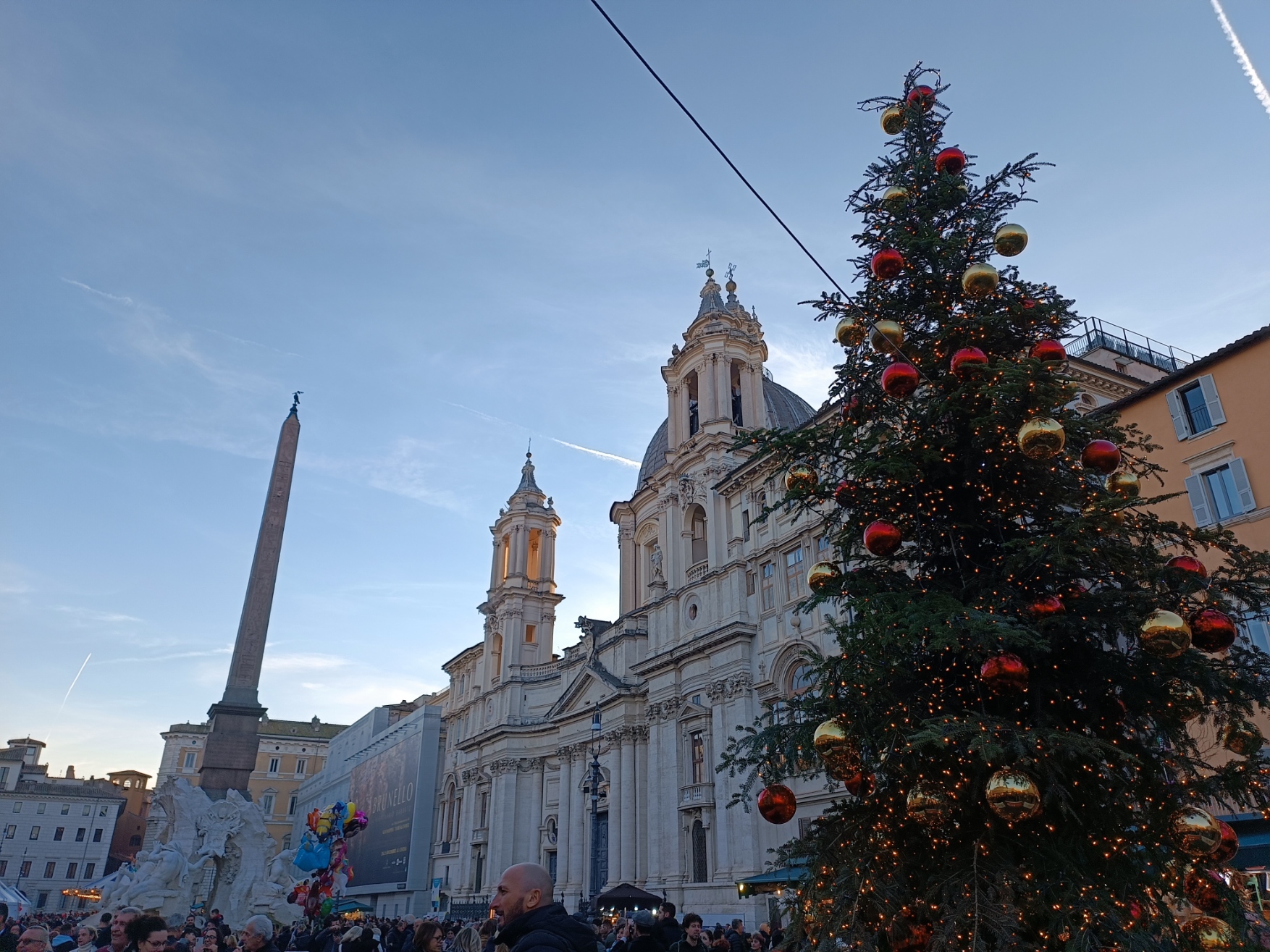
A walk through the historic center can connect the Pantheon, Piazza Navona, Trevi Fountain, and centuries-old churches containing extraordinary paintings and sculptures.
Exploring these landmarks with historical context helps visitors understand how ancient, Renaissance, and Baroque Rome developed within the same urban landscape.
Visit Rome’s Art-Filled Churches
Many of Rome’s greatest artistic treasures remain inside the churches for which they were originally created.
Travelers interested in Italian painting can discover works by Caravaggio and other major artists in religious buildings throughout the city.
For anyone fascinated by Tintoretto’s religious paintings, these churches offer another perspective on how artists communicated stories of faith through movement, color, composition, and light.
Frequently Asked Questions About Tintoretto at Rome Fiumicino Airport
Is there a Tintoretto painting at Rome Fiumicino Airport?
Yes. The Assumption of the Virgin by Tintoretto has been exhibited at Leonardo da Vinci–Fiumicino Airport since November 10, 2026.
Where exactly is the Tintoretto painting displayed?
The painting is located in the Piazza area of Terminal 1 Departures at Rome Fiumicino Airport.
When did the Tintoretto exhibition open?
The exhibition officially opened on November 10, 2026.
How long will the painting remain at Fiumicino Airport?
The initial official announcements did not specify a final exhibition date. Travelers should verify the current status before planning a visit.
Can you see the painting without a plane ticket?
The official announcements confirm the Terminal 1 Departures location but do not clearly establish access arrangements for visitors without boarding passes. Contact Aeroporti di Roma before making a special trip.
Is there an admission fee to see the Tintoretto painting?
The initial exhibition announcements do not specify a separate admission fee. Because the artwork is located inside an airport terminal, visitors should confirm any applicable access requirements directly with the airport.
Who painted The Assumption of the Virgin?
The artwork was created by Jacopo Robusti, known as Tintoretto, one of the leading painters of the Venetian Renaissance.
When was The Assumption of the Virgin painted?
Tintoretto created the painting between 1554 and 1555 for the Church of the Crociferi in Venice.
What does the painting depict?
The painting depicts the Virgin Mary ascending into heaven, surrounded by angels and cherubs, while the Apostles react to the event from beside her empty tomb.
What else can art lovers see in Rome?
Rome offers extraordinary artistic attractions, including the Vatican Museums, Sistine Chapel, St. Peter’s Basilica, Borghese Gallery, Capitoline Museums, and numerous historic churches containing works by major Renaissance and Baroque artists.
Make Art Part of Your Journey Through Rome
Italy’s artistic heritage is one of the country’s greatest attractions, and Tintoretto’s The Assumption of the Virgin at Rome Fiumicino Airport offers travelers an unusual way to experience it.
Whether you discover the painting before your flight or plan your vacation around Rome’s world-famous museums and historic churches, the opportunity to encounter art outside a traditional museum can make a journey feel more personal.
For travelers who love history, architecture, and painting, Rome offers countless ways to explore Italy’s cultural traditions, from ancient monuments to Renaissance masterpieces and the extraordinary art of the Baroque.
If your journey takes you through Terminal 1 at Fiumicino Airport, check whether Tintoretto’s masterpiece is accessible along your route. It could be a memorable final artistic discovery before leaving Italy.
Visitor information updated November 12, 2026. Exhibition location, availability, and access arrangements may change. Check current announcements from Aeroporti di Roma before traveling.