Rome has a new reason to celebrate its extraordinary combination of ancient history and contemporary innovation. The Colosseum–Imperial Forums station on Metro Line C has won the prestigious 2026 IN/ARCH National Architecture Award in the category of New Construction.
The award recognises an ambitious project that brings together modern public transport, contemporary architecture and the preservation of Rome’s remarkable archaeological heritage. More than just a metro station, it is a place where visitors and commuters can experience the city’s history even before reaching the surface.
The Colosseum Metro Station: An Award-Winning Architectural Project
The Colosseum–Fori Imperiali station received the 2026 IN/ARCH National Architecture Award, promoted by the National Institute of Architecture (IN/ARCH) in collaboration with ANCE, the Italian National Association of Building Contractors.
The award ceremony took place on November 13, 2026, at Ca’ Giustinian, the historic venue of the Venice Biennale.
The jury recognised the station for its ability to combine three essential elements: sustainable urban mobility, architectural quality and the protection of Rome’s archaeological heritage.
The award also celebrates the collaboration between the institutions, architects, engineers and construction companies involved in one of the most challenging infrastructure projects in the Italian capital.
A Museum Inside a Metro Station
What makes the Colosseum Metro C station particularly fascinating is its archaeological dimension.
Opened to passengers on December 16, 2025, the station reaches approximately 40 metres underground, passing through layers of history accumulated over more than 2,000 years.
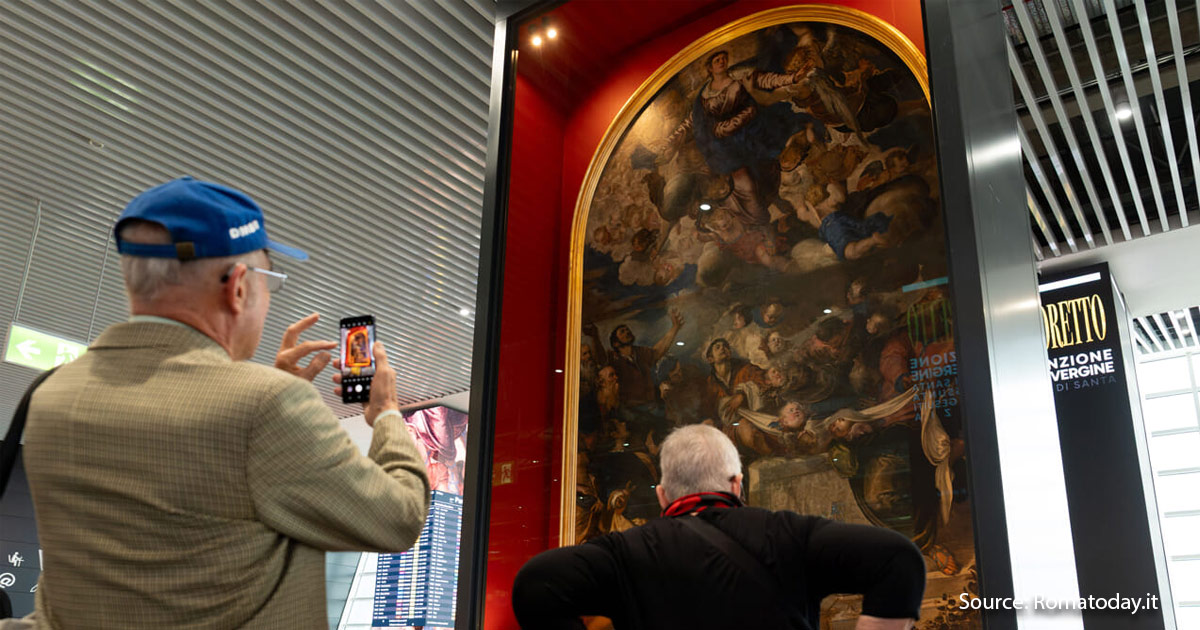
During the construction works, archaeologists uncovered important remains and structures from different periods of Rome’s past. Rather than simply removing these discoveries from the site, the project incorporated them into an exhibition space inside the station.
Today, passengers can admire archaeological remains, ancient walls, wells and other finds discovered during the excavations.
The exhibition project was developed with the involvement of the Colosseum Archaeological Park and the Department of Architecture and Design at Sapienza University of Rome.
The result is an unusual experience: a metro station that also functions as a free archaeological exhibition, allowing visitors to encounter ancient Rome as part of their everyday journey.
Where Ancient Rome Meets Modern Architecture
Building a metro station in the heart of Rome is never an ordinary engineering challenge.
The historic centre is one of the world’s richest archaeological areas, where almost every major excavation has the potential to uncover traces of the city’s long history.
The Colosseum–Fori Imperiali station demonstrates how modern infrastructure can be developed while respecting and showcasing this extraordinary heritage.
Its architectural design creates a dialogue between contemporary spaces and the archaeological discoveries preserved underground.
This approach was also highlighted by Rome’s Mayor, Roberto Gualtieri, who described the award as recognition of a vision that allows the city to modernise while protecting and enhancing its cultural heritage.
The station is also an important transport hub, providing an interchange between Metro Line C and Metro Line B, just a short distance from the Colosseum.
How to Visit the Colosseum Metro Station
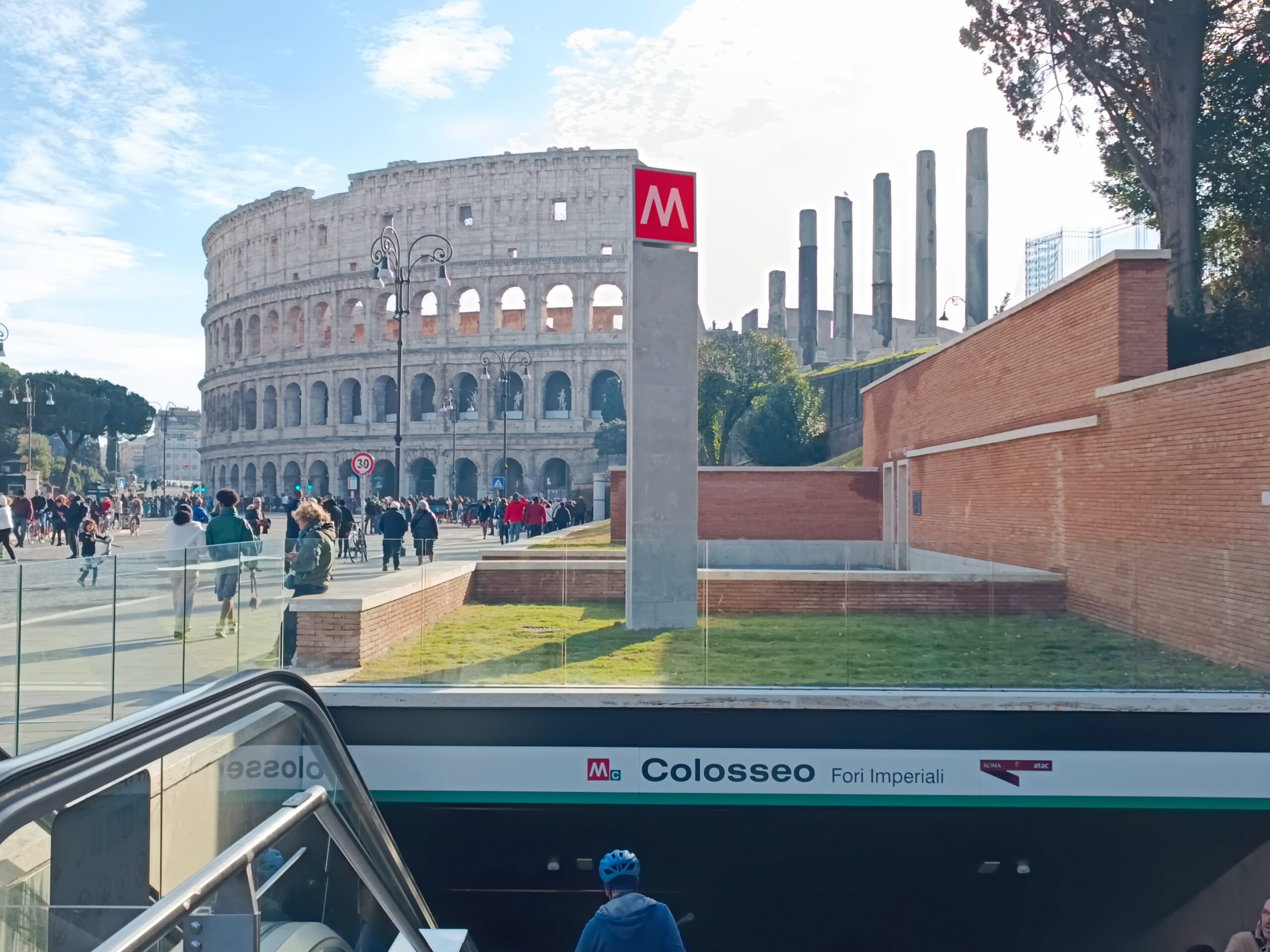
The Colosseum–Fori Imperiali station is located in the archaeological heart of Rome, right next to the Colosseum and the Roman Forum.
Its central location makes it particularly convenient for visitors exploring the city’s most famous ancient landmarks.
Even if you are not planning to use the metro, the station is worth knowing about for its unusual combination of transport infrastructure and archaeology.
It offers another perspective on Rome: not only the monuments visible above ground, but also the extraordinary layers of history hidden beneath its streets.
Another International Recognition: The Prix Versailles 2026
The IN/ARCH award is not the only recognition for the new Colosseum station.
The Metro C archaeological station has also been selected as a nominee for the 2026 Prix Versailles, an international architecture and design award associated with UNESCO.
It is competing in the Passenger Stations category, which celebrates outstanding railway and metro stations around the world.
The final awards ceremony is scheduled to take place in Paris on December 10, 2026.
This international nomination further confirms the architectural and cultural importance of the project, placing Rome among the cities using innovative design to transform public transport spaces.
Discover Rome Beyond Its Most Famous Monuments
Rome’s history is not limited to the Colosseum, the Roman Forum and the Pantheon. It is a city where the past continues to emerge in unexpected places, sometimes even beneath the ground.
The new Colosseum–Fori Imperiali metro station is a perfect example of how archaeology remains an essential part of everyday life in the Eternal City.
For travellers interested in discovering Rome from different perspectives, it is another fascinating place to add to their itinerary.
After all, in Rome, even taking the metro can become a journey through history.