On Via Portuense 317, in the Monteverde neighborhood on the western edge of Rome, an ordinary strip mall hides one of the city’s strangest and most rewarding archaeological sites. The Drugstore Museum preserves a cluster of ancient Roman burial chambers, part of the sprawling Portuense Necropolis, that were discovered during 1960s urban development and left exactly where they were found. For years, customers lined up for their prescriptions while ancient tombs sat in the floor beneath them. Today the site is open to the public for free, a genuine piece of hidden Rome that almost no tourist ever sees.
Sites like this are the reward for travelers who want to go beyond the postcards, but the best way to understand Rome is to pair the hidden corners with the great landmarks, ideally alongside a local who can connect the two. Discover the city with a range of private Rome tours led by expert local guides, who take you inside the Colosseum for the stories of the gladiators, beneath the Pantheon’s oculus, and through the historic center past Piazza Navona, the Trevi Fountain, and the Spanish Steps, with the option to add a gladiator experience or a hands-on Italian cooking class. And if you’d rather cover more ground without the long walks, the electric, silent Rome golf cart tours glide comfortably between the Colosseum, St. Peter’s Basilica, the Pantheon, and Trastevere, reaching narrow streets that buses simply cannot. Both are perfect for couples, families, or friends who want to see the real Rome, above ground and below.
What Is the Drugstore Museum?
The Drugstore Museum sits just beyond the Aurelian Walls, on the ancient road that once led to Portus, the great artificial harbor about eighteen miles southwest of the city. In antiquity, the roads leading out of Rome were lined with tombs, because Roman law forbade burial inside the city walls. The result was a vast funerary landscape that encircled the capital, and the Portuense Necropolis was one of its parts.
The museum’s odd name comes from the circumstances of its rediscovery. When a commercial building went up here in the 1960s, construction crews uncovered the ancient tombs. Rather than destroy them, the decision was made to preserve them in the basement, and the space above eventually became one of Italy’s first “drugstores,” an American-style retail concept new to Rome at the time. The store later closed, the tombs sat inaccessible for years, and the site was eventually transformed into the small museum you can visit today, now part of Rome’s municipal archaeological network.
What You Can See Inside
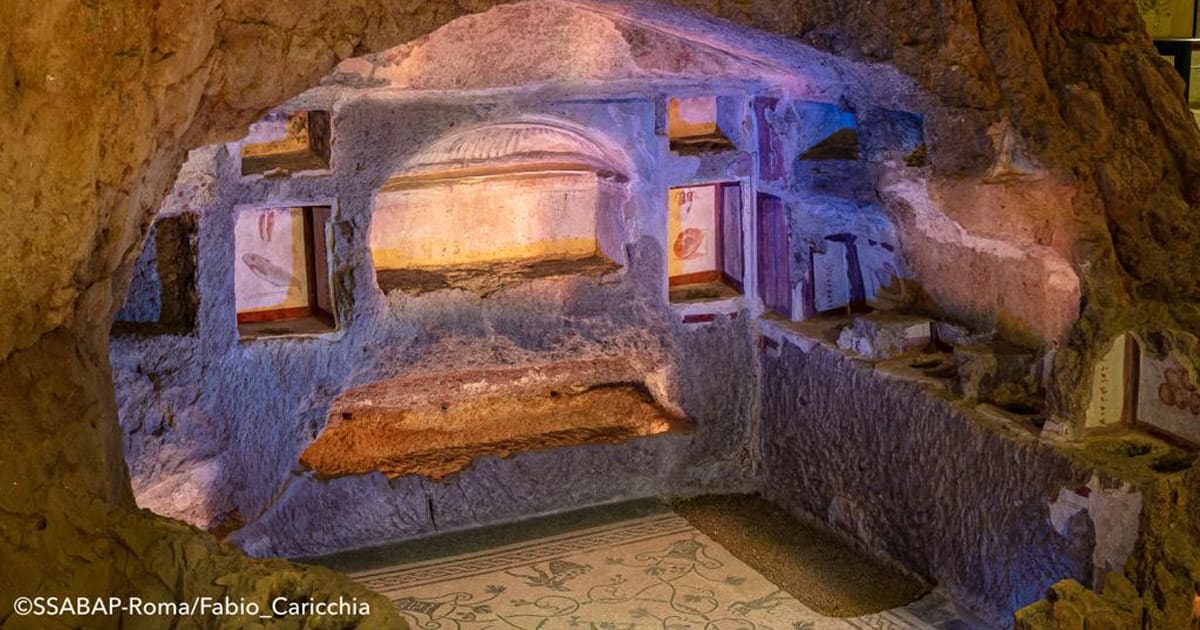
The subterranean complex preserves funerary chambers cut into the soft volcanic tuff, used between roughly the first and third centuries AD. The tombs are displayed in situ, meaning they have never been moved, so you walk through them in their original context.
Tombs, Columbaria, and Two Roman Burial Customs
There are five imperial-era tombs, including two columbaria, communal tombs lined with dozens of small niches that once held cinerary urns. The word columbarium comes from the Latin for dovecote, because the rows of niches resemble the compartments of a pigeon house. The site preserves evidence of both Roman burial practices of the era: cremation, with ashes placed in urns, and inhumation, the burial of the intact body.
Frescoes and Mosaics Worth the Trip
The artistic details are what make the visit memorable:
- One tomb features a frescoed arcosolium, an arched niche, decorated with banquet scenes, baskets of bread and fish, and trailing vine motifs. This imagery evoked communal remembrance and the journey to the afterlife, themes that carried deep meaning for Romans and, later, for early Christians.
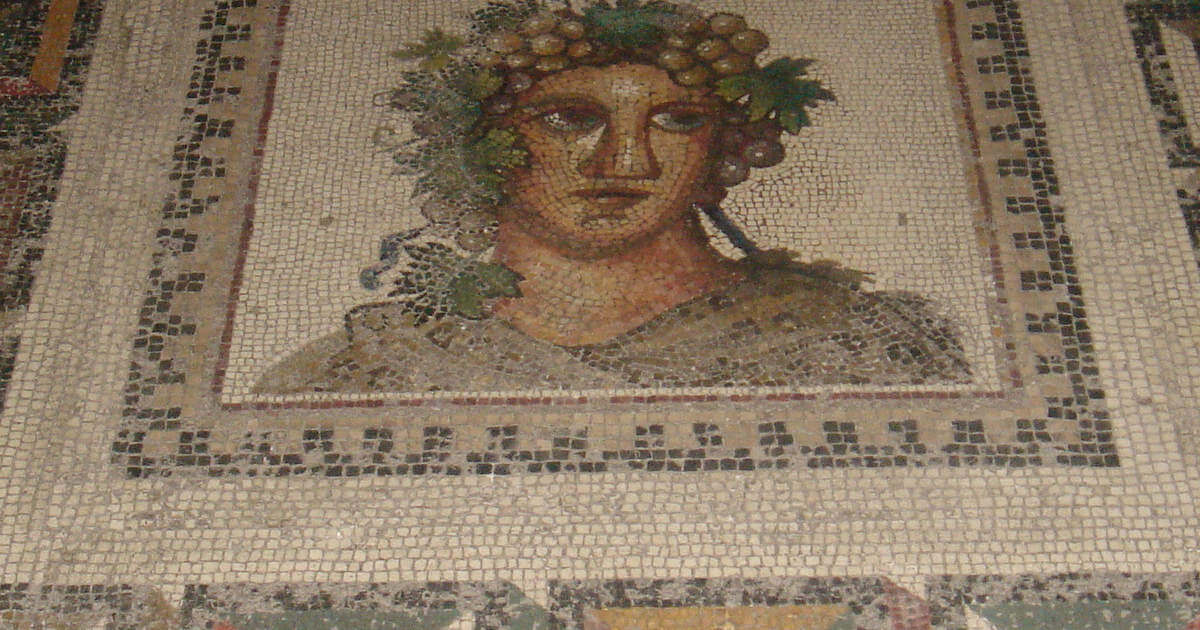
- A black-and-white mosaic pavement on the floor shows figures using tools to harvest plants sprouting from jars set in the corners, a scene tied to the cycle of the seasons and the grape harvest.
For American visitors used to seeing Roman artifacts behind glass in museums back home, standing directly inside a two-thousand-year-old painted tomb is a completely different experience.
Why This Site Captures the Spirit of Rome
The Drugstore Museum is the perfect illustration of how Rome actually works. The city is built in layers, and the modern one sits directly on top of the ancient one. A pharmacy, a parking structure, a subway tunnel, a strip mall- any of them can suddenly reveal something two thousand years old. Rome has so much buried history that a discovery like this, which would be a national headline almost anywhere else, becomes a quiet neighborhood museum on a commercial street.
That layering is exactly what a good guided tour helps you see. Once you understand that the city is a stack of eras pressed together, you start noticing it everywhere: the ancient column built into a medieval wall, the Renaissance church raised on a pagan temple, the tomb beneath the shop floor.
Planning Your Visit
- Where: Via Portuense 317, in the Monteverde/Portuense district of western Rome, not far from Stazione Roma Trastevere and the Centrale Montemartini museum.
- Admission: Entry is free, part of Rome’s municipal archaeological network.
- Hours: The museum keeps limited hours and guided visits, and opening times can be unpredictable at a site this small. Check the official Turismo Roma listing before you go, and consider calling ahead.
- Getting there: It’s an easy trip from Stazione Roma Trastevere, roughly a kilometer away. Combine it with a visit to Centrale Montemartini, where ancient statues are displayed among old power-plant machinery, for a full afternoon of Rome’s most unusual museums.
Go Beyond the Guidebook
The Drugstore Museum won’t appear on most first-time itineraries, and that’s exactly the point. It rewards the curious traveler who wants to understand Rome as a living, layered city rather than a checklist of monuments. Pair a hidden site like this with the great landmarks, explore them with a guide who can tie the whole story together, and you’ll leave with a far richer sense of the Eternal City. Choose the experience that fits your pace, whether an intimate private walking tour or a comfortable golf cart ride, and let Rome reveal itself from the tomb floors up.