

Pubblico dominio, https://it.wikipedia.org/w/index.php?curid=2003905
Hello, I’m Pietro Paolo, your guide in Rome.
When people plan a Rome Trip, they usually think of the Colosseum, the Vatican, and the grand imperial ruins of the Palatine Hill. What many don’t realize is that beneath those monumental layers lies something far more intimate—and incredibly rare.
The House of the Griffins (Casa dei Grifi) is one of those places that even seasoned travelers often miss. Recently reopened to the public with an innovative real-time guided experience, it offers a unique chance to step inside one of the best-preserved Republican-era Roman homes in the city .
This is not a typical archaeological visit. It’s a journey into ancient Roman domestic life, made accessible through technology, storytelling, and careful preservation
Most archaeological sites in Rome impress through scale. The House of the Griffins does the opposite. It draws you in through detail.
A Different Kind of Rome Trip Experience
Located on the Palatine Hill, beneath the later imperial palaces of Domitian, this domus dates back to between the late 2nd and mid-1st century BCE, making it one of the oldest surviving Roman houses in Rome .
What saved it is also what hid it for centuries: the massive foundations of the imperial palaces were built directly over it, sealing the house and preserving its decorations almost untouched.
For travelers interested in a Rome Trip that goes beyond the obvious, this site offers something rare—a glimpse of Rome before emperors, before marble grandeur, before the city became an empire.
Why the House of the Griffins Is So Special
The House of the Griffins takes its name from two striking griffins in white stucco, positioned symmetrically against a red background inside one of the rooms. These mythical creatures—half eagle, half lion—were symbols of protection and prestige in Roman culture.
But the real magic lies in the interiors.
- Wall paintings among the finest examples of early Second Style Roman frescoes
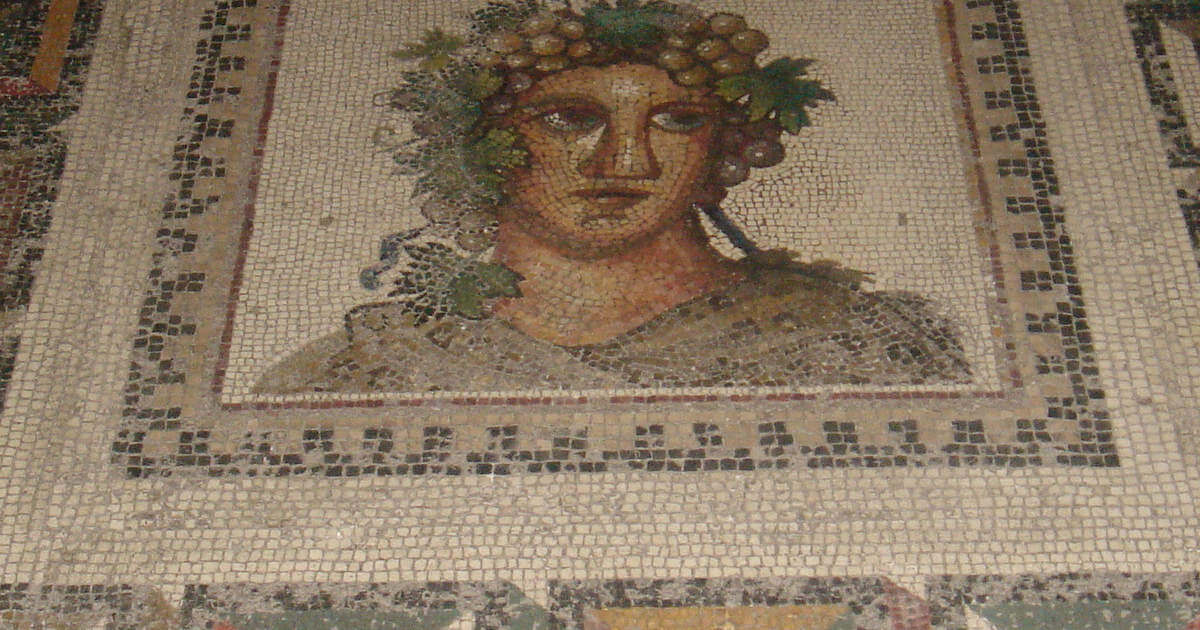
- Mosaic floors with black-and-white geometric patterns and rare polychrome details
- Illusionistic architectural elements painted to mimic columns, marble panels, and depth
One room features an extraordinary opus scutulatum floor with perspective cubes made from different colored stones—one of the earliest known examples of this technique in Rome .
This wasn’t a palace. It was a refined private home, designed to impress guests through elegance rather than size.
A Rome Trip Powered by Technology: The Real-Time Visit
Because of its fragile condition and the steep staircase leading to the underground level, the House of the Griffins cannot be visited in a traditional way by everyone. Instead of limiting access, the Parco Archeologico del Colosseo introduced a real-time guided visit, blending archaeology and technology.
Here’s how it works:
- A professional guide enters the house with a live video camera
- Visitors watch the tour in real-time streaming on a large projection
- Carefully designed lighting scenarios activate progressively, highlighting mosaics, frescoes, and architectural details
- The experience alternates with 3D reconstructions and virtual models, showing how the house once looked in its original context
This approach allows everyone—including visitors with mobility limitations—to experience the site while preserving its delicate microclimate and surfaces.
It’s one of the most forward-thinking archaeological experiences currently available during a Rome Trip.
The Palatine Hill Before the Emperors
When you walk through the Forum or climb the Palatine Hill, it’s easy to think of Rome only as an imperial city. The House of the Griffins tells a different story.
This home belonged to Rome’s Republican elite, long before Augustus transformed the Palatine into the seat of imperial power. Its walls preserve layers of history: use, modification, partial abandonment, and finally burial beneath imperial foundations.
What you see today is not just a house—it’s a palimpsest of Roman life, showing how the city evolved over centuries .
For travelers interested in archaeology, history, or art, this site adds depth and nuance to any Rome Trip.
Practical Information for Your Rome Trip
The House of the Griffins can currently be visited under specific conditions :
- Opening period: from March 3, 2026, to December 31, 2026
- Day: Tuesdays only
- Languages:
- Italian at 14:00
- English at 15:00
- Duration: approx. 30 minutes
- Group size: max 12 people
- Ticket: Forum Pass SUPER + €8 guided visit supplement
- Meeting point: Arch of Titus, Via Sacra
Because availability is limited and demand is expected to grow, planning ahead is essential—especially if you’re organizing a Rome Trip with specific dates in mind.
Who This Experience Is Perfect For
The House of the Griffins is ideal if you are:
- Visiting Rome for the second or third time
- Interested in hidden gems rather than crowded highlights
- Curious about Roman domestic life, not just public monuments
- Traveling in a small group and value curated experiences
It also pairs beautifully with other Palatine and Forum sites, creating a thematic Rome Trip focused on archaeology and early Roman history.
Final Thoughts: Adding the House of the Griffins to Your Rome Trip
Rome rewards those who slow down and look beneath the surface.
The House of the Griffins is not loud or monumental—it’s quiet, refined, and deeply evocative.
With Kirba Tours, you can include this unique experience in a private Rome Trip itinerary, combining the House of the Griffins with the Roman Forum, Palatine Hill, and underground sites.
If you’d like to discover one of Rome’s most exclusive archaeological experiences, you can explore the private tours you can book in Rome and design an itinerary that goes beyond the usual highlights—into the true layers of the Eternal City.