Among the most remarkable women of Ancient Rome, Agrippina the Elder stands out as a symbol of courage, ambition, and political power.
As the wife of the renowned Roman general Germanicus, granddaughter of Emperor Augustus, and mother of future Emperor Caligula, Agrippina was at the center of the Julio-Claudian dynasty during one of Rome’s most turbulent eras.
Unlike many women of her time, Agrippina refused to remain a passive figure behind powerful men. She accompanied her husband on military campaigns, became a beacon of loyalty to the Roman people, and boldly challenged the authority of Emperor Tiberius.
Her life was defined by triumphs, widespread popularity, intense political struggles, exile, and profound tragedy. Today, Agrippina the Elder stands as a powerful example of female influence in Imperial Rome.
Who Was Agrippina the Elder?
Agrippina the Elder (Vipsania Agrippina) was born around 14 BC into one of the most prestigious families in Rome.
She was the daughter of:
Through her mother, Agrippina was directly connected to the imperial family, making her one of the most important descendants of Augustus.
Her father Agrippa was one of the architects of Augustus’ power, famous for his military victories, especially the naval victory at Actium in 31 BC against Mark Antony and Cleopatra.
Growing up within the imperial household, Agrippina was surrounded by politics, military strategy, and the complicated world of Roman succession.
Agrippina and Germanicus: The Perfect Roman Couple
Around 5 AD, Agrippina married Germanicus Julius Caesar, one of Rome’s most admired generals.
Their marriage united two important branches of Roman aristocracy:
- Agrippina represented the bloodline of Augustus;
- Germanicus belonged to the powerful Claudian family.
Together they became one of the most popular couples in the Roman Empire.
They had nine children, including:
- Nero Caesar
- Drusus Caesar
- Caligula (future emperor)
- Agrippina the Younger
- Julia Drusilla
- Julia Livilla
Their family would later play a central role in Roman imperial history.
Agrippina the Elder: A Woman on the Front Lines of Rome
One of the most remarkable aspects of Agrippina’s life was her presence alongside Germanicus during military campaigns.
Roman women traditionally did not participate directly in warfare, but Agrippina accompanied her husband to the frontiers of the Empire.
She traveled with him during campaigns in:
- Germania;
- Gaul;
- the Eastern provinces.
Her presence among the soldiers increased her popularity.
One famous episode occurred in 14 AD, after a military rebellion among Roman troops in Germania. Agrippina helped restore order and became a symbol of loyalty and stability.
Ancient sources describe her as courageous and deeply connected with the army and Roman citizens.
Agrippina and the Popularity of Germanicus
Germanicus was considered one of the great hopes of Rome.
He was:
- a successful general;
- a member of the imperial family;
- admired by soldiers and citizens.
Many Romans believed that Germanicus represented the future of the Empire.
Because Agrippina was always beside him, she shared his popularity.
This created concern among political rivals, especially Emperor Tiberius, who feared that Germanicus’ influence could threaten his own authority.
The Mysterious Death of Germanicus
In 19 AD, Germanicus died in Antioch while serving in the eastern provinces.
His death remains one of the great mysteries of Roman history.
Many ancient sources suggested that he may have been poisoned, possibly on orders connected with Tiberius or his allies, although historians continue to debate the exact circumstances.
Agrippina strongly believed that her husband had been murdered.
She returned to Rome carrying his ashes and became a symbol of opposition to Tiberius’ government.
Agrippina the Elder Against Tiberius
After Germanicus’ death, Agrippina became increasingly hostile toward Emperor Tiberius.
She believed that her husband’s death was politically motivated and defended the rights of her children as descendants of Augustus.
Her popularity among Romans made her a powerful figure.
However, her open opposition to the emperor made her a political threat.
The relationship between Agrippina and Tiberius deteriorated rapidly.
Eventually, she and some of her sons were accused of political opposition and removed from public life.
Exile on the Island of Pandataria
In 29 AD, Agrippina was forced into exile on the island of Pandataria (modern Ventotene), the same place where other important women of the imperial family had been imprisoned.
Her sons also suffered persecution:
- Nero Caesar died in exile;
- Drusus Caesar was imprisoned and later died.
Agrippina remained in exile until her death in 33 AD.
Ancient sources describe her final years as tragic, portraying her as a woman who refused to surrender her dignity despite suffering.
The Rehabilitation of Agrippina by Caligula
When Agrippina’s son Caligula became emperor in 37 AD, he restored his mother’s reputation.
He:
- brought her remains back to Rome;
- placed them in the Mausoleum of Augustus;
- honored her memory publicly.
Her image appeared on coins, an extraordinary recognition for a Roman woman.
Agrippina became remembered not as an enemy of the state, but as a respected member of the imperial family.
Agrippina the Elder and the Power of Roman Women
Agrippina represents a new type of influential Roman woman.
Unlike earlier Roman matrons, she was publicly visible and politically active.
Her influence came from:
Imperial Bloodline
As granddaughter of Augustus, she represented the legitimacy of the imperial family.
Family Networks
Through her children, she became the ancestor of future emperors.
Public Reputation
Her connection with the army and citizens gave her unusual authority.
She demonstrated that women could influence Roman politics even without holding official office.
Agrippina the Elder vs Agrippina the Younger
Because both women played important roles in Roman history, they are often confused.
Agrippina the Elder
- Wife of Germanicus;
- Mother of Caligula;
- Granddaughter of Augustus;
- Died in exile in 33 AD.
Agrippina the Younger
- Daughter of Agrippina the Elder;
- Sister of Caligula;
- Wife of Emperor Claudius;
- Mother of Nero.
Both women were among the most powerful figures of Imperial Rome.
Agrippina the Elder in Rome Today
Visitors interested in discovering Agrippina’s world can explore several locations connected with the Julio-Claudian dynasty.
For travelers who want to explore Ancient Rome with a local guide, Kirba Tours offers a Colosseum & Gladiator History Private Tour as well as an Ancient Rome: Colosseum, Palatine Hill & Roman Forum Private Tour.
The Mausoleum of Augustus
The monumental tomb where Agrippina’s remains were placed after her rehabilitation by Caligula.
The Ara Pacis
Created during Augustus’ reign, this monument celebrates the imperial family and the beginning of a new era.
The Roman Forum
The political heart of Rome, where the struggles of imperial succession unfolded.
The Capitoline Museums
Home to portraits and sculptures connected with Roman imperial families.
Agrippina the Elder’s Legacy
Agrippina’s story has fascinated historians for centuries because she represents both strength and tragedy.
She was:
- a descendant of Augustus;
- wife of Rome’s most beloved general;
- mother of an emperor;
- a woman who challenged imperial authority.
Her life reveals the complex position of women in Ancient Rome: excluded from formal political power but capable of influencing the course of history.
Why Agrippina the Elder Still Fascinates Visitors Today
The story of Agrippina the Elder brings visitors closer to the human side of Ancient Rome.
Behind emperors and monuments were families, rivalries, ambitions, and personal tragedies.
Agrippina’s life reveals:
- the hidden role of women in Roman politics;
- the struggles of imperial succession;
- the dramatic world of the Julio-Claudian dynasty.
Discovering Agrippina means exploring a Rome beyond the monuments—a Rome shaped by powerful women whose voices still echo through history.
Frequently Asked Questions
Who was Agrippina the Elder?
Agrippina the Elder was the wife of Germanicus, granddaughter of Augustus, and mother of Emperor Caligula.
Why is Agrippina the Elder famous?
She is famous for her political influence, her role beside Germanicus, her conflict with Emperor Tiberius, and her importance in the Julio-Claudian dynasty.
Was Agrippina the Elder an empress?
No. She never officially ruled Rome, but she was one of the most influential women of the early Empire.
Where was Agrippina the Elder exiled?
She was exiled to Pandataria (modern Ventotene), where she died in 33 AD.
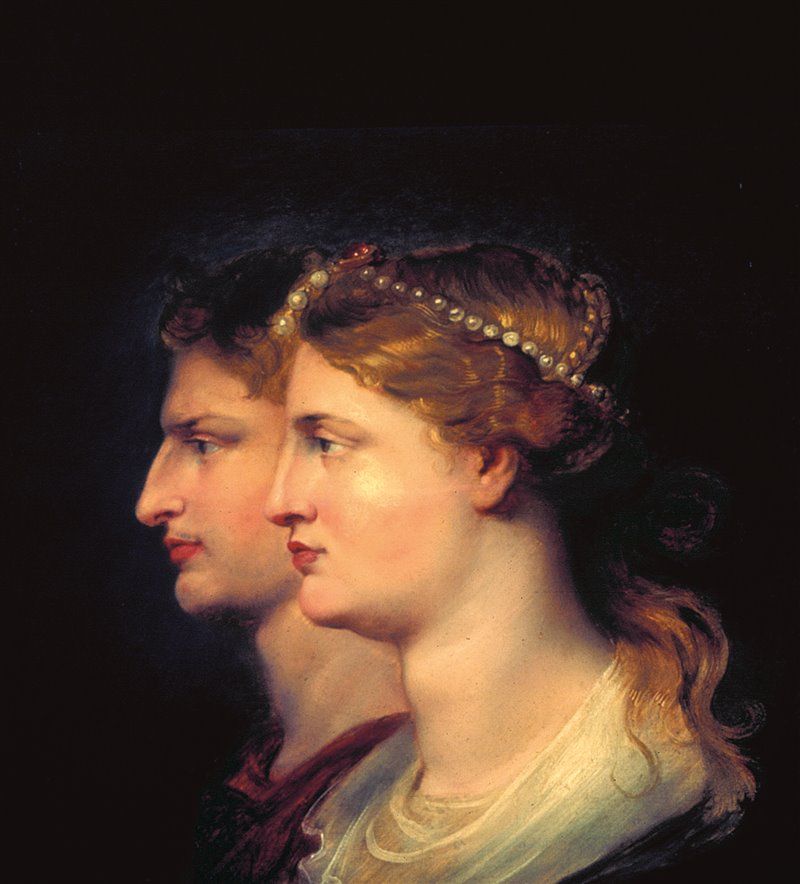
Peter Paul Rubens – Agrippina and Germanicus (National Gallery of Art): https://it.wikipedia.org/wiki/File:Peter_Paul_Rubens_-Agrippina_and_Germanicus%28National_Gallery_of_Art%29.jpg