
Rome is a city where history and legend often become impossible to separate. While millions of visitors come to admire the Colosseum, the Vatican, and the Pantheon, another story has echoed through the Eternal City’s streets for more than four centuries—the tragic fate of Beatrice Cenci.
Executed in 1599, Beatrice became one of Rome’s most famous historical figures. To some she was a murderer. To others, she was an innocent young woman driven to desperation by years of abuse. Her story has inspired poets, painters, playwrights, and novelists, making her one of the most enduring symbols of injustice in Italian history.
Who Was Beatrice Cenci?
Beatrice Cenci was born in Rome on February 6, 1577, into one of the city’s wealthiest noble families.
Her father, Count Francesco Cenci, possessed enormous wealth but was notorious for his violent temper and repeated conflicts with the law. Contemporary documents and later historical accounts describe him as a cruel and abusive man whose behavior terrorized his own family.
Although surrounded by privilege, Beatrice’s childhood was marked by fear rather than luxury.
Today, historians distinguish between documented facts and later literary embellishments, but there is broad agreement that the Cenci household was infamous even by the standards of Renaissance Rome.
Francesco Cenci: One of Renaissance Rome’s Most Feared Noblemen
To understand Beatrice’s story, it is essential to understand her father.
Francesco Cenci had accumulated vast wealth inherited from his family, yet his life was filled with scandals, legal disputes, and violent behavior. Historical records describe numerous criminal accusations and substantial fines imposed by the Papal authorities.
According to later accounts, he abused his power within the household and isolated members of his family, particularly after moving them to the fortress of Petrella Salto, northeast of Rome.
Whether every accusation can be historically verified remains debated, but his reputation for brutality became central to the events that followed.
The Murder That Shocked Rome
In 1598, Francesco Cenci died after being attacked inside the family’s castle at Petrella Salto.
Investigators soon concluded that the murder had been planned by members of his own household. Beatrice, her older brother Giacomo, her stepmother Lucrezia Petroni, and several servants were accused of organizing the killing.
According to the prosecution, Francesco was first struck, then his body was thrown from a balcony in an attempt to make his death appear accidental.
The case immediately became one of the greatest criminal scandals of Renaissance Rome.
The Trial of Beatrice Cenci
The trial attracted enormous public attention.
Pope Clement VIII insisted that justice be carried out despite widespread sympathy for Beatrice and her family. Many Romans believed that years of abuse should have been taken into account, while the Papal authorities feared that showing mercy for parricide could weaken public order.
The defendants were imprisoned and interrogated under the judicial practices of the time.
Despite attempts by the defense to highlight Francesco’s violence, the court found Beatrice, Giacomo, and Lucrezia guilty of murder.
The Execution at Castel Sant’Angelo
On September 11, 1599, an enormous crowd gathered near Castel Sant’Angelo.
Beatrice Cenci, only 22 years old, was publicly beheaded alongside her stepmother Lucrezia. Her brother Giacomo received an even harsher execution, while her younger brother Bernardo was spared because of his age but was forced to witness the deaths of his family members.
Contemporary accounts describe an unusually emotional reaction from the Roman public.
Many people believed Beatrice had become the victim of an excessively severe justice system, transforming her almost immediately into a popular heroine rather than a criminal.
Why Romans Considered Beatrice Innocent
Although legally convicted, Beatrice quickly became a symbol of innocence.
Stories circulated that she had endured years of physical and sexual abuse at the hands of her father. Whether every detail can be historically confirmed remains uncertain, but these accounts deeply influenced public opinion.
For many Romans, Beatrice represented a young woman abandoned by both society and the legal system.
This popular perception survived long after the trial and helped transform her into one of Rome’s greatest legends.
From Historical Figure to Literary Legend
Few Italian historical figures have inspired as many artists as Beatrice Cenci.
During the nineteenth century, Romantic writers elevated her story into a symbol of resistance against tyranny.
Among the best-known works inspired by her life are:
- The Cenci by Percy Bysshe Shelley
- Stories by Stendhal
- Works by Alexandre Dumas
- Dramas by Antonin Artaud
- Numerous Italian novels, paintings, and theatrical productions.
These artistic interpretations often emphasized Beatrice’s courage and suffering more than the legal facts of the case.
The Portrait of Beatrice Cenci
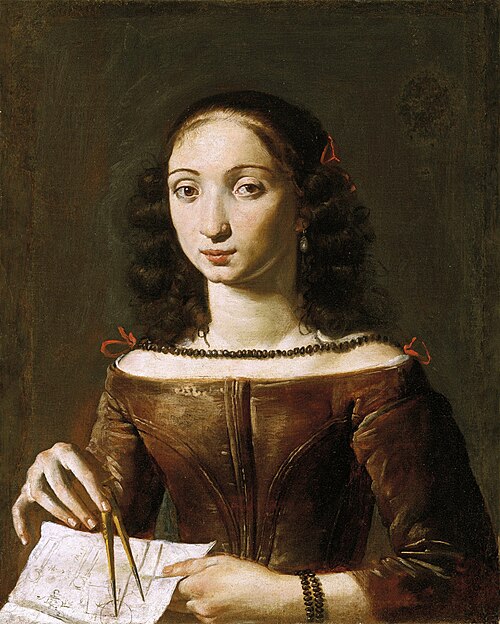
One of Rome’s most famous paintings is traditionally believed to portray Beatrice.
For centuries, visitors admired the portrait attributed to Guido Reni, depicting a young woman dressed in white with an expression of melancholy and dignity.
Today, however, art historians question both the attribution and whether the sitter is actually Beatrice Cenci. Despite these doubts, the painting remains inseparable from her legend and continues to shape the public’s imagination.
The Ghost of Beatrice Cenci
Like many Roman legends, Beatrice’s story did not end with her execution.
According to local folklore, every year on the night of September 10–11, her ghost crosses the bridge toward Castel Sant’Angelo, carrying her severed head in her hands before disappearing into the darkness.
Another version of the legend places her spirit at Petrella Salto, where the murder of Francesco Cenci took place.
Although there is no historical evidence for these stories, they remain among Rome’s most famous ghost legends and continue to fascinate visitors.
Places Connected to Beatrice Cenci in Rome
Travelers interested in Beatrice’s story can still visit several locations associated with her life.
Palazzo Cenci
The family’s historic residence still stands in Rome’s Jewish Ghetto district, preserving memories of one of the city’s most dramatic noble families.
Castel Sant’Angelo
The site of Beatrice’s execution remains one of Rome’s most visited landmarks and is closely linked to her legend.
Ponte Sant’Angelo
The bridge where thousands witnessed the execution continues to connect visitors with one of the darkest chapters of Renaissance Rome.
Church of San Pietro in Montorio
According to tradition, Beatrice was buried here after her execution, and the church remains an important stop for those following her story.
Why Beatrice Cenci Still Fascinates the World
More than four centuries later, historians continue to debate the true nature of Beatrice Cenci.
Was she a murderer?
A victim?
A heroine?
Or all three at once?
Modern scholarship tends to reject simplistic interpretations. Instead, Beatrice is increasingly viewed as a young woman caught between the rigid laws of the Papal States, family violence, and a justice system determined to make an example of one of Rome’s most notorious noble families.
Discover the Hidden Stories of Rome
Behind Rome’s magnificent monuments lie countless stories of power, betrayal, justice, and resilience.
The story of Beatrice Cenci reminds us that the Eternal City is not only a place of emperors and popes but also of ordinary people whose lives became extraordinary through history.
Exploring neighborhoods such as the Jewish Ghetto, Campo de’ Fiori, and the streets surrounding Castel Sant’Angelo allows visitors to experience the Rome that Beatrice once knew—where every alley holds centuries of unforgettable stories.
Frequently Asked Questions
Who was Beatrice Cenci?
Beatrice Cenci was a Roman noblewoman born in 1577 who was executed in 1599 after being convicted of helping murder her father, Francesco Cenci. Her story became one of Italy’s most famous historical legends.
Why is Beatrice Cenci famous?
She became famous because many Romans believed she was a victim of prolonged abuse rather than a cold-blooded criminal. Her tragic fate inspired writers, artists, and playwrights throughout Europe.
Where was Beatrice Cenci executed?
She was publicly executed on September 11, 1599, near Castel Sant’Angelo in Rome.
Is the ghost of Beatrice Cenci real?
The ghost is part of Roman folklore. According to legend, she appears every year on the anniversary of her execution carrying her severed head across Ponte Sant’Angelo.
Can you visit places connected to Beatrice Cenci?
Yes. Visitors can explore Palazzo Cenci, Castel Sant’Angelo, Ponte Sant’Angelo, and San Pietro in Montorio, all closely associated with her story.
Image Credits: https://it.wikipedia.org/wiki/Ritratto_di_Beatrice_Cenci